


 |
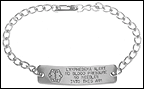
Courtesy NLN. |
With the help of the National Lymphedema Network (NLN), Karin Douglas, a breast cancer survivor and lymphedema activist, has created a Lymphedema Alert bracelet and necklace to protect breast cancer survivors from receiving treatment on their affected arm. Lymphedema (chronic swelling) of the arm is a side effect of breast cancer surgery, particularly if some of all of the axillary (underarm) lymph nodes were removed.
The Lymphedema Alert bracelet is made of non-allergic stainless steel with a link chain that stretches over the wrist. The bracelet contains the words, "No Blood Pressure – No Needles in this Arm" to alert a healthcare professional of the patient’s risk of lymphedema. According to the National Lymphedema Network, the Lymphedema Alert bracelet helps breast cancer survivors increase their chances of remaining lymphedema-free or keep their existing lymphedema under control. The bracelets also help educate the community about the seriousness of lymphedema.
Lymphedema of the arm is the chronic swelling or feeling of tightness around the arm or hand caused by the accumulation of lymphatic fluid in spaces between arm tissue. During axillary node dissection (lymph node removal), the normal drainage of lymph from the arm is disrupted, increasing the chance for fluid build-up. It is estimated that 10% to 20% of breast cancer patients who undergo axillary node dissection develop lymphedema.
According to the National Lymphedema Network, treatments to the affected arm that could trigger or worsen lymphedema of the arm may include blood pressures, injections, blood draws, and other medical tests. Patients should also receive detailed instructions from their physicians on when and how to exercise after a mastectomy (breast removal) and lymph node removal. Often after breast surgery and axillary node dissection, surgeons will encourage patients to do arm exercises to reduce stiffness and prevent lymphedema.
Other actions that may help prevent lymphedema include:
- Avoiding lifting, pushing, or pulling with the affected arm.
- Avoiding repetitive movements with the affected arm.
- Wearing soft pads under the arm after axillary node dissection.
Click here to learn about other ways to help prevent lymphedema.
For patients who have had lymph nodes removed on one side of the body, the lymphedema bracelet should be worn on wrist of the arm involved in surgery, denoting that surgery was performed on that side of the body. For patients who had bilateral lymph node removal, the bracelets can help make healthcare professionals aware of the patients surgical history and proceed with caution when drawing blood or performing other medical procedures on that limb.
In addition to Lymphedema Alert bracelets, Douglas has also created Lymphedema Alert necklaces for patients with lymphedema of the lower extremities. The necklaces are similar to the bracelets and include a wallet size care with detailed instructions on how to care for the affected limb. As with the bracelets and necklaces, the wallet cards are designed to help alert healthcare professionals if the patient is unable to communicate with them.
The Lymphedema Alert bracelets or necklaces may be ordered from the National Lymphedema Network (a nonprofit organization). Click here to order a Lymphedema Alert bracelet or necklace.
- The National Lymphedema Network, a national nonprofit organization, provides information on the Lymphedema Alert bracelets and necklaces at http://www.lymphnet.org/bracelet.html
- To learn more about lymphedema, please visit http://www.imaginis.com/breasthealth/lymphedema.asp
- To learn more about the lymph nodes, the lymphatic system, and lymph nodes surgery, please visit http://www.imaginis.com/breasthealth/lymph_nodes.asp
