|
Mastectomy is the surgical removal of a
breast. Surgery is presently the most common treatment for breast cancer. Following
mastectomy, immediate or delayed breast reconstruction is possible in many instances.
Main menu:
Types of Mastectomy
There are several different types of surgical procedures used to treat breast cancer.
Depending on the location or surgeon who performs the procedure, different terms may be
used.
Surgical procedures for breast cancer include:
- Simple or total mastectomy: removal of the breast, with its skin and nipple,
but no lymph nodes. In some cases, a separate sentinel node biopsy
is performed to remove only the first one to three axillary (armpit) lymph nodes.
- Modified radical mastectomy: removal of the entire breast, nipple/areolar region,
and often the axillary lymph nodes. This is the most common form of mastectomy performed
today.*
- Radical mastectomy: removal of the entire breast, nipple/areolar region, the
pectoral (chest) major and minor muscles, and lymph nodes. This procedure is rarely
performed today.*
- Quandrantectomy: removal of a quarter of the breast, including the skin and breast
fascia (connective tissues). The surgeon may also perform a separate procedure to remove
some or all of the axillary (armpit) lymph nodes, either an
axillary node dissection
or a sentinel node biopsy.
- Partial or segmental mastectomy: removal of a portion of the breast tissue
and a margin of normal breast tissue. This procedure usually involves removing less tissue
than a quandrantectomy but more than a lumpectomy or wide excision.
- Lumpectomy
or wide excision: removal of the breast cancer tumor and a surrounding margin of
normal breast tissue.
- Excisional biopsy
also the removal of the breast tumor and a surrounding margin of normal breast tissue.
Sometimes further surgery is not needed if an excisional biopsy successfully
removes the entire breast cancer tumor. This is most likely to occur if the
breast tumor is very small. An excisional biopsy may be performed with "needle"
or "wire" localization.
*In the past, radical mastectomy was the frequently performed on women with breast
cancer. However, experts have found that modified radical mastectomy is equally effective
in most cases, and therefore, it has become the most common type procedure for removing
the entire breast.
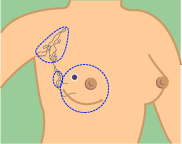
 |
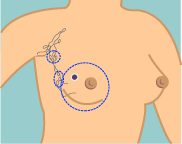
 |
| Radical Mastectomy. |
Modified Radical Mastectomy. |
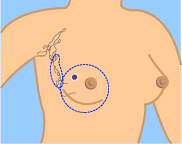
 |
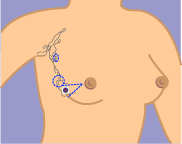
 |
| Simple (total) Mastectomy. |
Partial Mastectomy |
| Images courtesy of the NIH/NCI. |
Axillary
Node Dissection
Axillary node dissection, the surgical
removal of the axillary (armpit) lymph nodes, is usually
performed on patients with invasive cancers. A radical mastectomy, modified radical
mastectomy, or lumpectomy operation often includes axillary node dissection (this involves
a separate incision for lumpectomy patients). After surgery, the axillary lymph nodes are
examined under a microscope to determine whether the cancer has spread past the breast and
to evaluate treatment options.
The most common side effect of axillary
node dissection is lymphedema: chronic swelling of the arm.
Approximately 10% to 20% of patients typically experience lymphedema when axillary node
dissection is combined with radiation therapy. Patients are encouraged to report any
tightness or swelling of the arm to their physicians as soon as symptoms occur to prevent
possible long-term suffering. Other side effects of axillary node dissection include
temporary to permanent limitations of arm and shoulder movement and numbness in the
upper-arm skin.
Side effects of axillary node
dissection:
- lymphedema (swelling of the arm)
- limitations of arm/shoulder movement
- numbness of upper-arm skin
Sentinel
Lymph Node Biopsy
Sentinel lymph node biopsy is a procedure that involves removing only one to three sentinel lymph
nodes (the first nodes in the lymphatic chain). To perform sentinel node biopsy, a radioactive tracer
and/or blue dye is injected into a region of a tumor. The dye is then carried to the sentinel
node (the lymph node most likely to be cancerous if the disease has spread from its original
origin). If the surgeon determines that the sentinel node contains cancer, more lymph nodes
are removed and examined. Surgeons detect the sentinel lymph node by either spotting the
blue dye or by measuring a node’s radioactivity with a Geiger counter. If the removed
sentinel node is cancer-free, additional lymph node surgery may be avoided. Research
has shown that sentinel lymph node biopsy may safely eliminate the need to remove
many lymph nodes and reduce the chances of lymphedema (chronic arm swelling). However, the
procedure may not be appropriate for all patients. Click here to
learn more about sentinel node biopsy.
Choosing
Mastectomy as Breast Cancer Treatment
Breast cancer is often first detected
by an abnormality on a mammogram (an x-ray examination of
soft breast tissues used to identify lumps, cysts, tumors, and other abnormalities).
Patients are urged to receive a mammogram if they notice any suspicious lumps during breast self-examination (BSE). If an abnormality is seen on the
mammogram then additional breast imaging is usually ordered. Breast cancer is confirmed
by biopsy.
After biopsy, several factors are evaluated when
determining how to treat breast cancer including:
Click here for
more information on staging breast cancer.
While some patients will be clear candidates for mastectomy,
other women are faced with the choice
between mastectomy or breast conserving therapy (lumpectomy,
usually followed by radiation therapy). Though both
mastectomy and lumpectomy have equal survival rates, there are advantages and
disadvantages to both procedures. Lumpectomy may preserve the physical appearance of the
breast but usually requires six to seven weeks of radiation therapy. Mastectomy may reduce
local recurrence of breast cancer, but additional decisions
about breast reconstruction are introduced. Patients are
encouraged to educate themselves on all possible options and to thoroughly discuss
treatment and reconstruction with their physicians before deciding on a course of
treatment.
Mastectomy
and Breast Reconstruction
It is important for women to realize
that breast reconstruction is possible for the majority of breast cancer patients after
mastectomy. Often modified radical mastectomy patients may undergo breast reconstructive
surgery during the same operation to remove the breast.
Advantages to immediate breast
reconstruction:
- Patients do not wake up to the
"shock" of losing a breast.
- Patients may avoid additional reconstructive surgery.
Disadvantages to immediate breast
reconstruction:
- Patients may find it emotionally
difficult to weigh all of their reconstructive options while also dealing with their
recent breast cancer diagnosis and treatment alternatives.
- Occasionally there may be complications
with reconstructive healing that interfere with chemotherapy or radiation treatment, if needed.
Reconstructive surgery
usually involves insertion of breast implant or a muscle flap. Click here
to learn more about breast reconstruction.
Women who do not wish to have further surgery may be
fitted with an external prosthesis (an artificial breast) after healing from mastectomy.
Most prostheses are made to resemble the bodys own weight and touch. According to
the American Cancer Society, it is essential for women to have their prostheses properly
weighed to balance the body and anchor their bra. Women should take their time in
determining which prosthesis is right for them as prices vary considerably. Several
manufacturers also make special mastectomy bras that have breast pockets sewn into them. Click here to find resources for breast prosthesis and
mastectomy bras.
Before
Surgery
Most mastectomy patients will meet with
their surgeon a few days prior to surgery to ask any questions they may have about the
procedure and its risks. Patients must also sign a consent form which they should review
carefully. It may also be necessary for patients to donate blood for a possible blood
transfusion during surgery.
Patients are encouraged to discuss any
medications they may be taking that could interfere with surgery. Patients will typically
be instructed not to have any food or drink at least eight hours before surgery.
The
Mastectomy Procedure
General anesthesia is administered
during mastectomy, and an EKG monitor (electrocardiogram) is connected to the patient to
monitor heart rates. Blood pressure and vital signs are also monitored throughout the
surgery.
To perform a simple mastectomy, a
surgeon makes an incision along the perimeter of the breast (closest to the tumor area),
leaving most of the skin intact. Typically, the nipple is not removed during simple
mastectomy, although milk ducts leading to the nipple are cut. The underlying tissue is
gently cut free and removed. Often a plastic or rubber drainage
tube is inserted in the affected area. The skin is carefully closed with stitches or
clips, which are usually removed within a week, and a dressing (bandage) normally covers
the site. Mastectomy with axillary (armpit) lymph node dissection usually lasts between
2-3 hours. Immediate breast reconstruction will increase the duration of surgery.
The drainage tube placed in the breast
or under the arm removes blood and lymph node fluid accumulated during the healing
process. Drainage tubes are usually removed within two weeks, when the drainage is reduced
to less than 30 ccs (1 fluid oz) per day.
Possible effects of mastectomy include:
- wound infection
- hematoma (blood trapped in the wound)
- seroma
(clear fluid trapped in the wound)
- lymphedema:
temporary to permanent limitations of arm/shoulder movement (if lymph nodes are removed
during the operation)
- numbness in the upper-arm skin
- phantom breast pain
After
Surgery
After mastectomy, patients generally
spend two to three days in the hospital, although some may stay up to eight days. Most
modified radical mastectomy patients spend an average of three days at the hospital, and
those who have breast reconstruction in addition to
mastectomy may spend three to six days, depending on the bodys rate of healing.
Major soreness from mastectomy usually
lasts two to three days, although many mastectomy patients do not experience soreness
after surgery. A linear scar at the mastectomy site is probable. Many patients do
experience a pulling sensation near or under their arm after mastectomy.
Patients should receive instructions before leaving the hospital concerning:
- care of the wound and dressing
- type of pain/sensations to expect
- use of pain medications
- how to monitor the drainage tube
- how to recognize signs of infection
- any restricted activities
- emotional feelings to expect
- proper diet
- when to begin arm exercises to reduce
stiffness
- when to wear a bra
- when to begin wearing a prosthesis (if
chosen)
Source: American Cancer Society
Online: Surgery: What to Expect
Physicians will normally schedule
follow up exams seven to 14 days after mastectomy. At the follow up exam, the results of
the pathology report are usually shared with patients. Radiation treatment may or may not
be necessary after mastectomy. Patients with problems or concerns after surgery should
contact their surgeon right away.
Click
here for information on exercising after mastectomy.
Phantom Breast Pain
Studies have shown that many women experience phantom breast sensations after mastectomy. In a
recent study conducted at Johns Hopkins Hospital, more than one third of 279 mastectomy patients experienced phantom
breast pain after mastectomy. The incidence of phantom breast pain was similar, regardless of whether or not the women
had breast reconstruction after breast cancer surgery.
Symptoms of phantom breast pain may include:
- Unpleasant itching
- Pins and needles
- Pressure
- Throbbing
Physicians believe that phantom breast pain occurs after mastectomy for the same reasons as phantom pains occur
after limb amputations. According to Srinivasa Raja, MD of Johns Hopkins, during mastectomy, small nerves are cut
between the breast tissue and skin area. This causes the neural connections in the brain to undergo neural
plasticity (reorganization). This process, as well as the spontaneous firing of electrical signals from the ends of
cut or injured nerves, causes phantom sensations, said Dr. Raja. Women who experience breast pain prior to mastectomy
are most likely to have sensations of pain in the breast area after surgery.
Physicians recommend that patients who experience phantom sensations in the breast area after surgery report their
symptoms to their physicians immediately so that the pain can be properly managed. In some cases, exercise or breast
massage may help alleviate phantom breast pain, although patients should first discuss these options with their
physicians. In more severe cases, medications may be prescribed to reduce phantom breast pain. Phantom breast pain
does not indicate that cancer cells are still present in the breast area or that cancer may return.
Exercising After
Mastectomy and Lymph Node Removal
It is important that a patient ask her physician when it is safe to begin exercising and using the surgery-side arm again
after a mastectomy. While there are no contraindications to performing any number of exercises after full recovery from
mastectomy, there are certain precautions that should be taken by any person who has undergone a mastectomy, especially
those who have had accompanying lymph node dissection.
Any minor injury to the skin on the side of the mastectomy may become infected more easily than an injury on the other
arm. This is because the lymphatics have been disrupted and lymph
nodes have been removed, leaving the arm more vulnerable
to invading organisms such as bacteria. The lymphatics normally serve to drain fluids from the limb and the lymph
nodes act, in some sense, as a filter, removing harmful substances from the lymph fluid.
Up to 20% of women who have undergone mastectomy and axillary lymph node dissection experience some
edema (swelling) in the arm and report a higher incidence of irritation to minor skin trauma for this
reason. Click here for more information on lymph nodes and breast health.
In addition, there may be a higher chance of axillary vein thrombosis (a clot in the deep vein in the armpit) in
women who have undergone surgery in that area; especially if a more complete axillary dissection with the removal
of 30 or more lymph nodes is performed. This is because the lymph nodes are normally located near blood
vessels, and (unavoidable) scarring at or near the axillary vein may result from surgery. This scarring may
tether, kink, or narrow the blood vessel and make it more susceptible to further injury.
While an increased incidence of deep vein thrombosis has not been reported in the medical literature after axillary
surgery, it has been, in rare cases, associated with strenuous upper body exercise, since overdeveloped musculature
may affect nearby nerves, veins, and arteries (thoracic outlet syndrome). Therefore, many physicians recommend
tempering upper extremity exercise after surgery with periods of rest and keeping the arm elevated above the level
of the heart for a few hours, to avoid undue swelling. Mastectomy patients should be careful not to exercise too
intensely in order to avoid preventable injury.
On a positive note, regular use of the muscles after mastectomy will keep joints limber, stretch and soften scar
tissue, help recruit (open up) new lymphatics, and promote blood flow and actually help reduce clot formation. These
benefits generally outweigh the risks of a careful exercise program after mastectomy.
Recurrence
of Breast Cancer
Occasionally breast cancer can return (recur) after mastectomy or other treatment. There are three types of breast
cancer recurrence: local, regional, and distant. With local recurrence, cancerous tumor cells
remain in the original site, and over time, they grow back. A regional
recurrence of breast cancer is more serious than
local recurrence because it usually indicates that the cancer has spread past the breast and the axillary
(underarm) lymph nodes. A distant breast cancer recurrence,
also known as a metastasis (spread), is the most dangerous type of recurrence. With this type of
recurrence, breast cancer spreads to distant regions of the body, such as the bone, lung, liver, or brain.
Treatment will depend on the type and severity of the breast cancer recurrence. Breast cancer recurrences may be
treated with additional surgery, chemotherapy, radiation, or
other drug therapies (such as tamoxifen).
Additional
Resources and References
Updated: January 31, 2008
Return to Treatment Main Menu |