Advertisement

breast cancer logo
search tips  
Advertisement
 
Home About Us Discussion Free Newsletter News Site Map


Magnetic Resonance Imaging (MR)
Why is MR Performed? Format for Printing
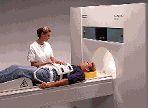
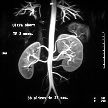
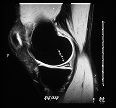
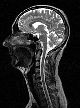
A Technologist prepares a person for an MRI scan MR Angiogram of the kidneys and aorta MRI of the knee showing a tear (arrow) MRI of the head and cervical spine (neck)

Magnetic Resonance (MR) Imaging (also know as MRI) was initially researched in the early 1970's and the first MR prototypes were tested on clinical patients in 1980. MR imaging was cleared for commercial availability by the Food and Drug Administration (FDA) in 1984 and its use throughout the world has spread rapidly since. There are now more than 10,000 MR systems in use worldwide.

MR is one of the best diagnostic exams for imaging many types of soft-tissue including:

  • the brain, vessels of the brain, eyes, inner ear
  • the neck, shoulders, cervical spine and blood vessels of the neck
  • the heart, aorta and coronary arteries
  • the thoracic and lumbar spine
  • the upper abdomen, liver, kidney, spleen, pancreas and other abdominal vessels
  • the pelvis and hips, male and female reproductive system, and bladder
  • the musculoskeletal skeletal system including joints such as the shoulder, knee, wrist, ankles and feet
MRI of the head and cervical spine (neck)
Sagittal MR image of a head and cervical spine

This is because MR can provide exquisite contrast detail between different tissue with vary similar densities, for instance gray and white brain matter.

MR imaging and MR angiography are finding a greater role in the detection, diagnosis and treatment of heart disease, heart attack, acute stroke and vascular disease which can lead to stroke. Additionally, MR imaging is a vital part of diagnosing and treating sports injuries, and MR is finding an increasing role in diagnostic mammography. MR is a powerful tool for finding and diagnosing many forms of cancer.

Updated: June 22, 2007

 Return to MR Main Menu

Advertisement

Click Here to Recommend This Article To A Friend
Home | About Us | Discussions | Free Newsletter | News | Advertise With Us | Format For Printing | Site Map

Imaginis.com subscribes to the HONcode principles of the Health on the Net Foundation.

Copyright © 1997-2008 Imaginis Corporation. All rights reserved. Imaginis® is a registered service mark of Imaginis Corporation, a health services company. All other trademarks and copyrights are property of their respective owners. Note: Use of this online service is subject to the disclaimer and the terms and conditions contained herein. Information found within the Imaginis.com website or in other sites linked to from Imaginis.com is provided for educational purposes only and is not intended to be used as a substitute for diagnosis and treatment by a medical doctor. Imaginis does not endorse and has no responsibility for the content of any other sites listed on Imaginis.com, and provides links and references merely as a convenience to its users. Seek immediate medical attention if your condition is urgent.


Advertisement