 |
Lymphedema is the chronic swelling or feeling of tightness in the arm or hand due to an
accumulation of lymphatic fluid in the soft tissue of the arm. The condition occurs when
lymph vessels, which normally carry excess fluid out of the limbs and back into central
circulation, have had their flow interrupted. Axillary (underarm) lymph node removal is commonly performed on breast cancer
patients to stage or treat their cancer. However, between 15% and 20% of breast cancer
patients who undergo axillary lymph node removal develop lymphedema. According to the
American Cancer Society, of the two million breast cancer survivors in the U.S.,
approximately 400,000 must cope with lymphedema on a daily basis.
Main Menu:
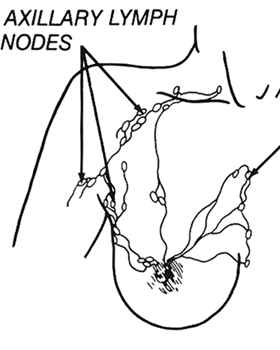
When breast cancer cells
begin to escape from the primary tumor site in the breast, they often first travel to the
lymph nodes under the upper arm. Therefore, it is often necessary to remove some or all of
the axillary lymph nodes during breast cancer surgery (mastectomy
or lumpectomy) to determine if the cancer has spread,
and if so, to what extent.
Lymph node removal is usually performed on patients with invasive breast cancers during
the same operation as mastectomy (breast removal) or lumpectomy (removing a breast lump),
and may involve a separated incision for lumpectomy patients. There are two procedures for
removing lymph nodes in breast cancer patients, axillary node dissection and sentinel node
biopsy.
Illustration courtesy of NCI/NIH.
- Axillary node dissection: This is the
standard way to remove axillary lymph nodes. Typically, 10 to 30 lymph nodes are removed
and examined in a pathology laboratory to determine whether they contain cancer cells.
- Sentinel node biopsy: This is a new approach and
involves only removing the first one to three lymph nodes in the lymphatic chain. Research
continues to show that checking the sentinel lymph nodes (first nodes) allows
physicians to accurately determine whether the axilla (armpit region) contains cancer and
may help reduce the chances of lymphedema. If the sentinel nodes contain cancer, then
additional surgery is performed to remove the remaining lymph nodes.
Some swelling (edema) in the affected breast and arm area is normal during the first
six to 12 weeks after surgery. Light arm and hand exercises are usually recommended during
breast cancer treatment and up to 18 months after treatment has been completed to help
keep the arm mobile. Please see the sections below on Exercising
After Mastectomy and Lymph Node Removal and Light Arm Exercises to
Help Prevent/Manage Lymphedema for more information.
Lymphedema (chronic swelling) of the arm tends to develop gradually in 15% to 20% of
breast cancer patients who have lymph nodes removed. Some research suggests that the
chance of developing lymphedema after breast cancer treatment is greater if a large number
of lymph nodes are removed, if radiation is used as
part of treatment, if tumor cells are present in the lymph does when initial surgery is
performed, or if wound complications develop after surgery. There is also research that
indicates that exercise and skin care after surgery can help reduce the chances of
lymphedema. All patients who have lymph nodes removed should be taught how to take care of
the affected arm and help prevent lymphedema. Patients should also know the early signs of
lymphedema and report any symptoms to their physicians immediately to help avoid long-term
suffering.
Early Signs of
Lymphedema |
- Feeling of tightness in the arm
- Pain, aching or heaviness in the arm
- Swelling and redness of the arm
- Less movement/flexibility in the arm, hand, wrist
- Rings, bracelets or sleeves do not fit
|
By following certain recommendations made by the American Cancer Society, National
Cancer Institute, and American Lymphedema Institute, breast cancer patients who undergo
lymph node removal can help reduce their chances of developing lymphedema. Because
lymphedema can occur up to years after breast cancer surgery, patients should continue to
follow these guidelines and report any symptoms to their physicians at once.
The following recommendations should be instituted early after breast cancer treatment
that involves lymph node removal and should be continued indefinitely. Research has shown
better control if exercises to keep the lymphatic channels open are adopted early on
compared to methods applied later in the course of lymphedema:
- Use the arm in normal activities (such as bathing, dressing, etc.).
- After surgery, keep the arm raised above the level of the heart for 45 minutes, two to
three times a day while lying down. Position the arm on a pillow so the hand is higher
than the wrist and the elbow is slightly higher than the shoulder.
- Use a soft ball or stress ball and perform squeezing exercises with the hand, even if
patients are not yet ready to perform raised arm positions immediately after surgery.
- Clean the skin of the arm and hand every day and keep it moist with lotion. Lotions
should not contain any alcohol, dyes, lanolin, mineral oil, petroleum products, talc or
perfumes.
- Make sure all clothing in contact with the affected area is clean, and change bandages
and dressing frequently.
- Avoid any needle sticks, blood tests, blood pressure testing, allergy tests or medical
procedures of any kind on the affected arm whenever possible
- Be careful to avoid too much pressure on the arm. Avoid tight jewelry, clothing or
elastic bandages on the affected arm.
- Do not use chemical hair removers under the arm. Use of an electric razor is recommended
to avoid nicks and cuts when removing underarm hair.
- Avoid extreme changes in temperature. Do not use hot tubs or saunas.
- Take precautions to avoid any injuries to the affected arm, such as scrapes, scratches,
burns, insect bites.
- Consider wearing soft pads under the arm after axillary node dissection.
- Wear a breast compression garment when traveling.
- Wear protective gloves when doing household chores, especially when chemical cleansers
are involved.
- Exercise regularly but rest the affected arm immediately if it becomes tired or sore.
- Maintain a balanced diet and an ideal weight.
| Patients Should See a Physician if
|
- Any swelling occurs, with or without pain, that last one to two weeks.
- The arm appears red or feels warm.
- If a temperature of over 100.5 degrees Fahrenheit (38 degrees Celsius) is present
without cold or flu symptoms.
|
Source: American Cancer
Society
It is important that patients talk to their physicians about when it is safe to begin
exercising and using the surgery-side arm again after mastectomy
(breast removal). While there are no contraindications to performing any number of
exercises after full recovery from mastectomy, there are certain precautions that should
be taken after mastectomy, especially if patients have also had lymph
node dissection.
Any minor injury to the skin on the side of the mastectomy may become infected more
easily than an injury on the other arm. This is because the lymphatics have been disrupted
and lymph nodes have been removed, leaving the arm more vulnerable to invading organisms
such as bacteria. In addition, there may be a higher chance of axillary vein thrombosis (a
clot in the deep vein in the armpit) in women who have undergone surgery in that area;
especially if a more complete axillary dissection with the removal of 30 or more lymph
nodes is performed. This is because the lymph nodes are normally located near blood
vessels, and (unavoidable) scarring at or near the axillary vein may result from surgery.
This scarring may tether, kink, or narrow the blood vessel and make it more susceptible to
further injury.
While an increased incidence of deep vein thrombosis has not been reported in the
medical literature after axillary surgery, it has been, in rare cases, associated with
strenuous upper body exercise, since overdeveloped musculature may affect nearby nerves,
veins, and arteries (thoracic outlet syndrome). Therefore, many physicians recommend
tempering upper extremity exercise after surgery with periods of rest and keeping the arm
elevated above the level of the heart for a few hours, to avoid undue swelling. Mastectomy
patients should be careful not to exercise too intensely in order to avoid preventable
injury.
On a positive note, regular use of the muscles after mastectomy will keep joints
limber, stretch and soften scar tissue, help open up new lymphatics, promote blood flow
and actually help reduce clot formation. These benefits generally outweigh the risks of a
careful exercise program after mastectomy.
Because light exercise after breast cancer surgery and lymph node removal can help
reduce the chances of lymphedema, patients should discuss how and when to begin arm
exercises. Some patients find that taking painkillers (analgesics) 30 minutes prior to
exercising helps alleviate discomfort, although all medications should be approved by the
patients physician.
The following are suggestions of exercises following breast cancer surgery from the
Wessex Cancer Trust, an independent charity that provides information and support to
patients with cancer. Each exercise may be performed five times in a row, three times a
day (morning, afternoon, evening) with the physicians approval.
- With palms up and elbows straight, stretch arms high above head, linking fingers
together.
- Bend elbows and clasp hands at the back of the neck. Push elbows out as far as possible
and then bring them together to touch in front of the body. Repeat.
- Place hands behind the back and lace fingers together. Slide hands as far as possible up
the body toward the neck.
- Place hands on shoulders (on the same side of the body) and move elbows up and then down
toward the sides of the body.
- Place hands on shoulders and make circular movements with the elbows. Circles should be
as large as possible. Change directions periodically.
- After breast stitches have been removed, stand with one foot in front of the other. Hold
on to a chair or table. Lean forward and swing the arm that was involved in the surgery
backwards and forwards, and then from side to side as far as it will go. Hold a small
weight to gain momentum. Increase movement until arm reaches shoulder height. Keep elbows
straight.
- Stand with one foot in front of one another. Hold onto a chair or table for support.
Lean forward and swing the arm on the side of the surgery in circles, first clockwise and
then counter-clockwise. Keep elbows straight.
- Face toward a wall. Place hands on the wall and inch fingers up the wall. Try to go
higher each day until arms are fully straight over head.
Treating lymphedema usually includes physical therapy, compression therapy,
medications, or a combination of these methods. In extreme cases, surgery (including
liposuction) may be performed to remove excess soft tissue. However, this is rarely done
to treat lymphedema and the outcomes of these procedures are still under investigation.
A careful examination of the arm should be made before treatment begins to determine
whether arm infections have occurred as a result of lymphedema or from other causes (such
as blood clots). Antibiotics are often prescribed to treat or prevent further infections
in lymphedema patients. Lymphedema treatment often involves combining a number of
therapies, called complex decongestive therapy (CDT). CDT includes manual lymph drainage
(MLD). In this procedure, an MLD certified therapist gently massages arm tissues to
stimulate the movement of lymph to healthy lymphatic vessels. In addition, medical
compression bandaging (wrapping the affected arm with low stretch bandages to increase
drainage and prevent fluid from refilling the arm), lymphedema exercises while wearing a
bandage, patient education (suggestions to reduce and cope with lymphedema), and using
compression garments after swelling has been reduced are essential components of
decongestive therapy.
| Complex Decongestive Therapy to Treat Lymphedema Includes: |
- drainage (MLD): massage therapy to
stimulate the movement of lymph to healthy lymph vessels
- medical compression bandaging: wrapping
the affected arm with low stretch bandages to increase drainage and prevent fluid from
refilling the arm
- performing lymphedema exercises while
wearing a bandage
- patient education: suggestions to
prevent, reduce, and cope with lymphedema
- using compression garments after
swelling has been reduced
|
Lymphedema is a serious, chronic condition that can cause psychological
and social problems in addition to physical ones. Many patients suffering from lymphedema
join support groups or seek psychological assistance to help cope with the condition. The
National Lymphedema Network provides a comprehensive list of lymphedema support groups
across the United States at http://www.lymphnet.org/support.html
Additional Resources and References
- The National Lymphedema Network provides information on a variety of topics relating
to lymphedema, including a complete listing of lymphedema treatment centers, support
groups, and a special pen pal program to correspond with fellow lymphedema sufferers: http://www.lymphnet.org/.
- The Lymphatic Research Foundation is a non-profit corporation whose mission is to
help identify, support and promote research into the causes, treatments, and potential
cures for lymphedema and angiodysplasia (abnormal vessel) disorders. To learn more about
the Lymphatic Research Foundation and the latest research on lymphedema, please visit http://www.lymphaticresearch.org
- The American Lymphedema Institute provides information on ways to prevent
lymphedema: http://www.imsa.edu/~bug/alih.html
- The Lymphedema Association of Australia provides detailed information on a variety
of topics related to lymphedema prevention and treatment: http://www.lymphoedema.org.au/
- The article, "Lymphedema: Current Issues in Research and Management," is
published in the September/October 2000 issue of CA A Cancer Journal for
Clinicians. While the article is written for an audience of healthcare professionals,
it is also a valuable resource for anyone familiar with the basics of lymphedema, http://www.ca-journal.org/
- To learn more about lymph nodes and the lymphatic system, please visit http://www.imaginis.com/breasthealth/lymph_nodes.asp
- To learn more about axillary node dissection, please visit http://www.imaginis.com/breasthealth/mastectomy.asp#axillary
- To learn more about sentinel lymph node biopsy, please visit
http://www.imaginis.com/breasthealth/sentinelnode.asp
- The Imaginis Breast Health Bookstore contains helpful books on lymphedema, including Coping
with Lymphedema by Joan Swirsky and Diane Nannery and Lymphedema: A Breast Cancer Patient's
Guide to Prevention and Healing by Jeannie Burt, Gwen White, and Judith R.
Casley-Smith.
Updated: December 8, 2007
|