


Stroke results from disease of the blood vessels supplying the brain with blood. Commonly, stroke is caused by atherosclerosis (deposits of cholesterol, fats, and other matter inside the vessel walls) of the left or right carotid artery of the neck. For example, turbulent blood flow through the carotid bifurcation (point where the common carotid artery splits into the internal and external carotid artery branches) dislodges material from the atherosclerotic narrowing and carries it to the brain, where it may form a plug in the arteries.
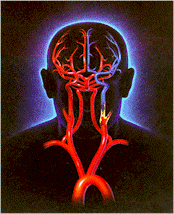 |
Image of vascular event that causes stroke, courtesy of the National Stroke Association (www.stroke.org). In this case, blood flow to the brain is blocked in the left carotid artery, causing the stroke/brain attack. |
- ischemic stroke happens when an artery leading to the brain becomes blocked by a blood clot (cerebral embolism) and circulation is obstructed
- ischemic stroke is also caused when a plaque or other fatty deposits (cerebral thrombosis) blocks an artery, significantly reducing blood flow (for example, to less than one fourth of the normal flow level)
- hemorrhagic stroke is caused by a rupture of the blood vessels which feed the brain
Roughly 80% of strokes are caused by clots (ischemic stroke) while the remaining 20% are caused by hemorrhage. In addition to disease of the carotid arteries, ischemic stroke can also be caused from clots originating from the heart, vessels of the legs or elsewhere in the body. Heart attack victims are susceptible to stroke, more than 20% of ischemic strokes are caused by clots from the heart.
Transient ischemic attack (TIA) is as a mild stroke (also called "mini-stroke") where the attack lasts for only a few minutes to less than 24 hours, followed by complete recovery. A TIA is a warning sign that a sufficient supply of blood is not reaching part of the brain. People who have suffered a TIA are at significant risk of having an acute stroke. Recognizing a "mini-stroke" is important because if appropriate treatment is begun, major strokes can be prevented.
Updated: January 14, 2008
