


Osteoporosis is a degenerative bone disease that primarily affects post-menopausal women. It is estimated that more than one in two women over 50 will have an osteoporosis-related fracture. Literally meaning "porous bone," osteoporosis is characterized by a decrease in normal bone density due to the loss of calcium and collagen. A loss of bone density causes bones to become brittle, and in turn, leads to frequent fractures and other serious effects. Osteoporosis is a threat to 44 million Americans and is currently one of the most under-diagnosed and under-treated disorders in medicine.
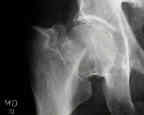
X-ray image of hip fracture, the femoral head has collapsed into the femur
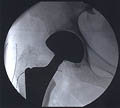
X-ray image of prosthetic hip joint, used to repair femoral fracture caused by osteoporosis. The femoral head is surgically removed and replaced by a prostheticball and socket.
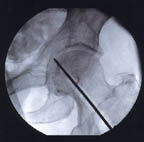
This hip fracture was surgically repaired with a prosthetic pin, shown above in this x-ray image
According to the National Osteoporosis Foundation, one in two women and one in four men over age 50 will have an osteoporosis-related fracture in her/his lifetime. Elderly women who suffer from severe osteoporosis experience hip, wrist, spine and other traumatic fractures from minor falls that would normally not occur in young adults. Hip fractures in elderly people can be difficult to treat and sometimes require prosthetic hip reconstruction and painful rehabilitation. Other serious effects of osteoporosis include loss of height, restricted mobility, and a humped back (also called a "dowager's hump").
It is estimated that osteoporosis accounts for more than 1.5 million fractures each years, including approximately:
- 300,000 hip fractures
- 700,000 vertebral fractures
- 250,000 wrist fractures
- 300,000 fractures at other sites
Before a woman reaches 30 her body gains more bone than it loses. Around age 30, this process balances out. However, the onset of menopause (and a decrease in the female hormone, estrogen) around 50 years of age may speed up the rate of bone loss. If bone loss becomes severe, a woman may develop osteoporosis.
The key to avoiding severe effects from osteoporosis is prevention. Women may protect themselves from severe bone loss by maintaining a balanced diet rich in calcium, performing regular weight-bearing exercise (such as walking or aerobics), limiting alcohol intake, not smoking, and considering hormone replacement therapy.
Osteoporosis may be diagnosed by a bone mineral density (BMD) test. BMD tests measure the amount of calcium and collagen in specific regions in the bones. The most common type of BMD test is the Dual Energy X-Ray Absorptiometry test (DEXA). DEXA is a quick, painless test that accurately measures a patient's bone density. Elderly women and others at risk for osteoporosis are encouraged to have routine BMD tests. This way, technologists may compare current calcium and collagen levels to previous test results and determine whether a substantial decrease has occurred.
If a patient's bone density is found to be lower than normal, she should consider treatment options that will increase bone density and strength. Treatment for osteoporosis may include taking calcium and vitamin D supplements, engaging in weight-bearing exercise (such as walking) or weight training (such as lifting weights or using weight machines), using hormone replacement therapy (usually for women past menopause), or taking prescription medications such as calcitonin (Miacalcin), alendronate (Fosamax), or raloxifene (Evista).
