


A mammogram report is a key component of the breast cancer diagnostic process. While a mammogram cannot determine whether a woman has breast cancer, it may indicate whether a breast abnormality is present, and if so, it may characterize that abnormality. Further breast imaging (with spot views or ultrasound) or breast biopsy is usually a direct result of mammography findings.
This section describes information and terminology that may appear on a mammogram report. Please note, the organization and information contained on individual mammogram reports varies significantly. Some radiologists document every finding whether it is significant or not while others will only address important findings that warrant further examination. This section should only be used as a general reference for mammogram terminology and information that may be documented.
The actual mammogram report should not be confused with the report a woman is required by federal law to receive within 30 days of her mammogram. The latter is not a copy of the official radiology report, but rather, it is usually a short letter stating whether her mammogram was normal or if an abnormality was detected. If a patient does not receive written results of her mammogram within 30 days, she should call the facility where the exam was performed. She should not assume the results are normal. Click here for more information on the Mammography Quality Standards Act created by the U.S. Food and Drug Administration (FDA).
The following sections may be included in a mammogram report:
Patient information: Usually appears at the top of the report and typically includes the patient’s name, age, and the reason for the mammogram (i.e., annual screening mammogram, referred by physician to evaluate new right breast lump).
Clinical history: The patient's medical and family history of breast cancer or other breast conditions. It may also include relevant medications the patient is taking, such as hormone replacement therapy.
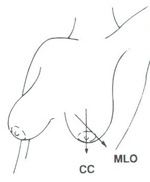
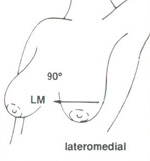
Procedure(s): May explain what types of mammogram views were taken. Typical views for screening mammograms include the cranio-caudal view (CC) and the medio lateral oblique view (MLO). Typical views for diagnostic mammograms include CC, MLO, and supplemental views tailored to the specific problem. These can include views from each side (latero medial, LM: from the side towards the center of the chest and mediolateral view, ML: from the center of the chest out), exaggerated cranial-caudal, magnification views, spot compression, and others.
 |
 |
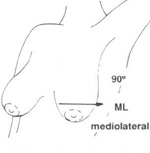 |
| Cranio-caudal (CC) view and mediolateral oblique (MLO) mammographic view | Latero medial (LM) mammographic view | Medio lateral (ML) mammographic view |
Findings: May describe what was found from the mammogram. Size, location, and characteristics of breast abnormalities may be noted. Primary signs of breast cancer may include spiculated masses or clustered pleomorphic microcalcifications.* Secondary signs of breast cancer may include asymmetrical tissue density, skin thickening or retraction, or focal distortion of tissue.* Some radiologists may also include comments about breast density and distribution of the breast tissue.
Impression: The radiologist's overall assessment of the findings. Often includes a classification of the mammogram using the BI-RADS system developed by the American College of Radiology (ACR).
Recommendation (optional): Some radiologists may give specific instructions on what actions should be taken next. For example, the radiologist could recommend: no action necessary, a six month follow-up mammogram, spot views, breast ultrasound, biopsy, etc.
*See terminology section below for explanations of these terms
