


The screening and diagnostic tools for detecting and diagnosing breast cancer have become more and more accurate since the early 1970s when modern mammography started to become widely available. Massive research and development and clinical refinement have made the entire process quite precise. The American College of Radiology (ACR) has developed the Breast Imaging Reporting and Data Systemâ„¢ (BI-RADSâ„¢) to categorize mammography findings.
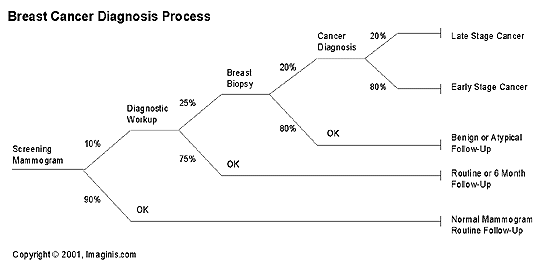
The theoretical clinical decision tree for detecting and diagnosing breast cancer has been refined to a very high level. However, the actual numbers and statistics shown below can vary from region to region depending on population density and patient demographics.
Screening mammography on an annual basis is now recommended for all women over the age 40. Of all of the screening mammograms performed annually approximately:
- 90% of all screening mammograms show no evidence of cancer (BI-RADS; category 1)
- 10% of all screening mammograms show abnormalities which require further diagnostic testing (BI-RADS; category 0)
Of those referred for additional diagnostic testing and further views (which may include diagnostic mammography, special mammography views, breast ultrasound or other adjunctive imaging such as MR, Sestamibi or T-scan) approximately:
- 30% are determined to be normal (BI-RADS; category 1) or contain benign findings (BI-RADS; category 2) which do not require further evaluation (beyond recommended annual screening mammography)
- 35% are determined to be probably benign (BI-RADS; category 3) and require closer monitoring and follow up within the next 6 months
- 20% (approximately 2% of all screening mammograms) are shown to be abnormal and require biopsy (BI-RADS; category 4 or category 5)
- 15% are shown to have cysts (usually using ultrasound) and require no intervention or biopsy (BI-RADS; category 2)
Of those referred for biopsy approximately:
- 80% of the abnormalities are shown to be benign
- 20% of the abnormalities are shown to be cancerous
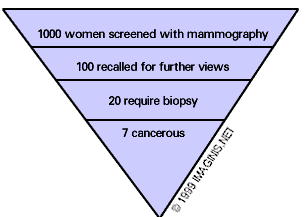
The "breast
cancer diagnosis triangle" describes the relationship of the
diagnostic decision tree (described above) and the breast cancer found.
Mammogram "categories" and ACR/BI-RADS Mammography Reporting System
