


Multiple sclerosis (MS) may be difficult to diagnose at first because symptoms can be mild and may suggest a number of conditions including stroke, emotional disorders, chronic fatigue syndrome, AIDS, Lyme disease, etc. A careful process that demonstrates findings that are consistent with MS and that also rules out other causes must be made to diagnose multiple sclerosis (MS). While Magnetic Resonance Imaging (MRI) is a very powerful tool in the diagnosis of MS, there is not a single laboratory test, symptom, or physical finding which, when present or positive, always means a person has MS.
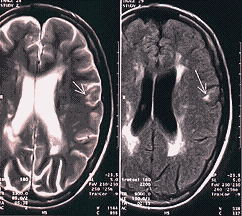
Axial T2 weighted MR image on left, bright CSF obscures the MS plaque in this brain. Fluid-suppressed "Turbo FLAIR" MR image, the bright MS plaques are now apparent. Images courtesy of Siemens Medical Solutions.
The basic guideline for diagnosing MS relies on two criteria:
- There must have been two attacks at least one month apart. An attack, also known as an exacerbation, flare, or relapse, is a sudden appearance of or worsening of an MS symptom or symptoms which lasts at least 24 hours.
- There must be more than one area of damage to central nervous system myelin—the sheath that surrounds and protects nerve fibers. The damage to myelin must have occurred at more than one point in time and not have been caused by any other disease that can cause demyelination or similar neurologic symptoms.
Several tests are used to help diagnose multiple sclerosis:
- Magnetic resonance imaging (MR or MRI)
- Clinical examination and tests of function
- Additional tests: evoked potential, CSF, and blood
Other symptoms of multiple sclerosis will be evaluated during the clinical examination conducted by a physician. This covers an extensive review of mental, emotional, and language functions, movement and coordination, vision, balance, and the functions of the five senses. Sex, birthplace, family history, and age of the person when symptoms first began are also taken into consideration.
It is not usually necessary to do all diagnostic tests for every patient. If, however, a clear-cut diagnosis cannot be made based on the tests above, additional tests of evoked nerve potentials, cerebrospinal fluid (CSF), and blood may be ordered.
Evoked potential tests are electrical diagnostic studies that can show if there is a slowing of messages in the various parts of the brain. They often provide evidence of scarring along nerve pathways that is not apparent on a neurologic exam.
Cerebrospinal fluid (CSF), usually taken by a spinal tap, is tested for levels of certain immune system proteins and for the presence of oligoclonal bands. These bands indicate an abnormal autoimmune response within the central nervous system, meaning the body is producing an immune response against itself. Oligoclonal bands are found in the spinal fluid of about 90-95% of people with MS, but since they are present in other diseases as well, they cannot be relied on as positive proof of MS. They may also take some years to develop.
Blood tests: There is no definitive blood test for multiple sclerosis; however, blood tests can rule out other causes for various neurologic symptoms. Some other conditions that cause symptoms similar to those of MS are Lyme disease, a group of diseases known as collagen-vascular diseases, certain rare hereditary disorders, and AIDS.
