 |
Computed Tomography (CT) imaging, also
known as "CAT scanning" (Computed Axial Tomography), combines the use of a
digital computer together with a rotating x-ray device to create detailed cross sectional
images or "slices" of the different organs and body parts such as the lungs,
liver, kidneys, pancreas, pelvis, extremities, brain, spine, and blood vessels. For many
patients, CT can be performed on an outpatient basis without requiring admittance to the
hospital.
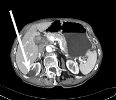
Among the various imaging techniques
such as MR and x-ray, CT has the unique ability to image a combination of soft tissue,
bone, and blood vessels. For example, conventional x-ray imaging of
the head can only show the dense bone structures of the skull. X-ray angiography of the head only depicts the blood vessels of the
head and neck and not the soft brain-tissue. Magnetic resonance
(MR) imaging does an excellent job of showing soft tissue and blood vessels, but MR does
not give as much detail of bony structures such as the skull. CT images of the head allow
physicians to see soft-tissue anatomic structures like the brain's ventricles or gray and
white matter. Physician then can selectively "window" the digital CT images on
the computer monitor to look at the soft tissue, then the bone and then the blood vessels,
as needed.
 |
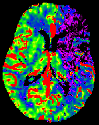
Colored CT image of the brain,
purple area on right of image indicates acute stroke |
CT is one of the best
tools for studying the lungs and abdomen. CT is an invaluable tool in the cancer diagnosis process and is often the preferred method for
diagnosing lung, liver and pancreas cancer. CT imaging and CT angiography are finding a
greater role in the detection, diagnosis and treatment of heart
disease, acute stroke and vascular
diseases which can lead to stroke, gangrene or kidney failure. Additionally, CT can be
used to measure bone mineral density for the detection of osteoporosis.
CT has excellent application in trauma cases and other emergencies. All dedicated
shock-trauma centers have a CT scanner in the trauma department so patients can be
immediately scanned to scout for major internal injuries such as aortic aneurysm (see
image below) or other internal bleeding.
| Sagittal multiplanar reconstructed
CT image of the thorax and abdomen showing an aortic aneurysm. The aorta (short arrow)
looks like a white "candy-cane" in the middle of this image. The aneurysm (long
arrow) is the thin line running through the candy cane. |
 |
CT is used extensively for diagnosing
problems of the inner ears and sinuses because of its ability to generate very high
resolution images. The anatomy of the inner ear and sinuses is made up of delicate soft
tissue structure and very fine bones. CT is excellent for imaging tumors or polyps in the
sinuses and disease that cause degeneration of the small bones in the inner ear.
 |
High resolution axial CT image of
the inner ears and sinuses. A large polyp in the right sinus (arrow) can be seen |
CT can provide
detailed cross sectional images and diagnostic information for nearly every part of the
body including:
- the brain, vessels of the brain, eyes,
inner ear, sinuses
- the neck, shoulders, cervical spine and
blood vessels of the neck
- the chest, heart, aorta, lungs,
mediastinum
- the thoracic and lumbar spine
- the upper abdomen, liver, kidney,
spleen, pancreas and other abdominal vessels
- the pelvis and hips, male and female
reproductive system, bladder, and GI tract
- the skeletal system including bones of
the hands, feet, ankles, legs and arms, and jaws
Updated: September 13, 2007
|