|
Main Menu:
What is a Sentinel Lymph Node?
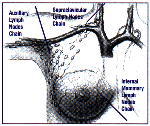
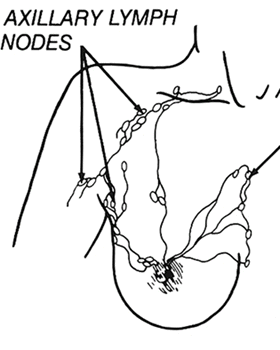
In the breast, a network of
lymphatic vessels drain fluid and cells to the bean-shaped lymph nodes in the axilla
(armpit). The sentinel node is the very first lymph node(s) to receive
drainage from a cancer-containing area of the breast.
Put another way, when breast cancer cells begin to escape from the primary tumor site in
the breast they travel to the lymph nodes under the arm; the first lymph node they reach
is the 'sentinel' lymph node.
What is Sentinel Lymph Node Biopsy?
When breast cancer is diagnosed,
women (and men) must often undergo axillary lymph node
dissection (i.e., removal of underarm nodes) to check for the spread of cancer. This
process is part of staging the cancer.
Unfortunately, the removal of these lymph nodes can lead to lymphedema (chronic
swelling) of the arm in a certain percentage-- about 10-20%--of cases.
Sentinel lymph node biopsy is a diagnostic procedure used to determine whether breast
cancer has spread (metastasized) to axillary lymph
nodes (i.e., lymph glands under the arm). A sentinel lymph node biopsy requires the
removal of only one to three lymph nodes for close review by a pathologist. If the
sentinel nodes do not contain tumor (cancer) cells, this may eliminate the need to remove
additional lymph nodes in the axillary area.
Research on this technique has shown that sentinel lymph node biopsy may be associated with less
pain and fewer complications than standard axillary dissection. However, the procedure may not
be appropriate for all breast cancer patients.
How is Sentinel Lymph Node Biopsy Performed?
Sentinel lymph node biopsy is a complex surgical procedure
that requires an experienced surgeon to successfully perform. Before going to the operating room, the
surgeon injects a small dose of a low-level radioactive tracer called technetium-99 into
the breast in the region of the patients tumor. Technetium-99 contains less
radiation than a standard x-ray, CT scan
or bone scan and is a relatively safe substance. A blue dye is also injected to help
visually track the location of the sentinel node during surgery. The surgeon then uses a
hand held counter to detect the radioactive tracer and locate the sentinel node.
Sometimes, nuclear medicine images (also known as lymphoscintigraphy)
of the lymphatic system will be obtained after injecting the technetium-99 before
surgery. Since the uptake of the technetium-99 by cancerous lymph nodes is sometimes
different than the uptake by normal lymph nodes, these nuclear medicine images may also
help show which lymph nodes are cancerous.
Next, the surgeon will wait for the
technetium-99 and dye to travel from the tumor region to the sentinel lymph node(s), just
as cancer cells might spread. Depending on the protocol followed, the surgeon usually
waits between 45 minutes to 8 hours after injection before bringing a patient to the
operating room for the biopsy. At some point during the procedure, a small amount of
blue dye will also be injected into the breast tissue near the area of the tumor.
Once the technetium-99 tracer and dye have reached the nodes, the surgeon will scan the
area with an electric, hand-held gamma ray counter (called a Geiger counter) to detect the
radioactive technetium-99.
The gamma ray counter is attached to a
small probe which the surgeon traces over the axilla to locate the sentinel node(s).
When the radioactive agent is found, the gamma ray counter will emit an audible tone,
revealing the exact location of the sentinel node(s). Once the area has been pinpointed,
the surgeon will make a small incision (usually one-half inch) and remove the sentinel
node(s) for a pathologist to examine under a microscope. The blue dye provides
additional visual confirmation of the sentinel nodes location during surgical
removal. Several clinical trials have revealed
that in the vast majority of cases, if the sentinel node does not contain cancer, then the cancer has
not spread past the breast. Sentinel node biopsy does not usually require the
placement of a fluid drainage tube (common in axillary
node dissection).
Why
is Sentinel Lymph Node Biopsy Performed?
 |
Courtesy NIH/NCI |
Sentinel lymph node biopsy may help in
determining which patients can avoid axillary node dissection and the removal of 10 to 30
lymph nodes. Most patients have only one to three sentinel lymph nodes under the
arm. Thus, an average of only two lymph nodes are removed in each patient with a
sentinel node biopsy. This, in turn, may reduce post-operative complications.
A standard axillary node dissection, removal of the
underarm lymph nodes, usually requires a larger four to six inch incision and a longer
recovery period than a sentinel node biopsy.
Researchers are currently investigating whether sentinel node biopsy should routinely be
performed in place of axillary node dissection. However, surgeons caution that more
studies on the benefits and risks of sentinel node biopsy should be conducted before the
procedure becomes widespread. Typically, patients who undergo a modified radical mastectomy or a lumpectomy may
require lymph node removal. Sentinel node biopsy or axillary node dissection helps
surgeons determine if breast cancer has spread to the lymphatics and the extent of the
spread.
Typically, patients who undergo a modified radical mastectomy or a lumpectomy may require
lymph node removal, either with the standard axillary node dissection or sentinel lymph
node biopsy. Removing some of the lymph nodes helps surgeons determine if breast cancer
has spread to the lymphatics and the extent of the spread.
In a study published in The New
England Journal of Medicine, 443 patients at 11 medical centers across the United States
underwent sentinel node biopsies. Researchers discovered that if the gamma ray counter
detected the radioactive agent (technetium-99) in the patients, then the sentinel node
biopsy was 97% accurate in pinpointing all cancerous lymph nodes. However, the study
was not completely successful. The gamma ray counter missed cancerous nodes in 13 of the
114 women whose cancer had spread past the breast. In an upcoming study, researchers
at the National Cancer Institute will compare sentinel node biopsy to the standard method
of lymph node removal (axillary node dissection) on 4000 women to determine which
procedure is superior.
What Happens When the Sentinel Node Is Found To Be
Cancerous?
After the surgeon removes the sentinel
node(s), a pathologist will perform a preliminary examination of the nodes to determine
whether they contain cancer cells. The sentinel lymph nodes will be classified as negative
(no cancer), positive (contain cancer), or indeterminate. However, this preliminary
report is followed by close examination and the final pathology report.
If the sentinel node is determined to
be cancerous while the patient is still in surgery, the surgeon will usually remove
additional lymph nodes in the axilla. However, the final pathology report is
not available until after the surgery has been completed, and patients should schedule a
follow-up visit with the surgeon to discuss the final report. Sometimes, the final
report indicates a positive (cancerous) sentinel node that was not seen on preliminary
review. If this occurs, then additional surgery may be necessary to remove more
nodes for examination.
What Are the Side Effects of a Sentinel Lymph Node Biopsy?
Because sentinel lymph node biopsy involves
removal of fewer lymph nodes than a standard axillary lymph node dissection, the potential
for side effects such as lymphedema is much lower. Many patients who undergo sentinel node
biopsy do not experience any side effects. However, some patients report post-operative
pain, nerve damage, or lymphedema after the procedure. These symptoms occur more
frequently when additional lymph nodes are removed along with the sentinel node.
The blue dye that is injected will turn
the urine green for about 24 hours and may cause a temporary bluish discoloration of the
breast skin. The radioactive energy from the technetitum-99 injection dissipates on its
own, and some of the radiation is eliminated through urine or bowel movement. The result
is that the radioactive material is only in the patient for a short time. Once the energy
is eliminated, patients will no longer carry the radioactivity. The levels of radiation
involved in a sentinel node biopsy are considerably lower than a patient would receive in
a conventional x-ray study, bone
scan or CT scan.
Most women who undergo sentinel node
biopsy spend one day or less in the hospital. Occasionally, sentinel node biopsy may be
performed on an outpatient basis.
Is Sentinel
Node Biopsy Accurate?
Many surgeons agree that breast cancer
may be accurately staged without having to remove any lymph
nodes besides the sentinel node. Nevertheless, researchers are finding that a low
percentage of sentinel node biopsy results can turn out to be false
negatives. That is, the sentinel nodes do not contain cancer when, in fact,
the patients other axillary lymph nodes do contain cancer.
This has been an important teaching
point in many advanced courses presented to physicians who perform sentinel node
biopsy. If a physician is uneasy about the looks of a sentinel node, even though it
is not cancerous, the surgeon will typically remove additional lymph nodes to check their
status.
The scenario of a negative
(non-cancerous) sentinel node and positive (cancerous) additional nodes in a patient can
occur for several reasons, including:
- The timing of the dye injections
- The type of dye/tracers used
- The presence of more than one sentinel
node
- The way in which the initial node was sectioned
or stained in the pathology lab
The American College of Surgeons Oncology Group recommends that physicians perform at least
30 sentinel lymph node biopsies followed by complete axillary node dissection, with an 85%
success rate in identifying the sentinel lymph node(s) and a 5% or lower false positive rate. After
they have accomplished this, physicians can then perform sentinel lymph node biopsy without a back-up
axillary node dissection. According to the Canadian committee, physicians who have performed less than
30 sentinel lymph node biopsies should only perform the procedure as part of a clinical trial. Patients
who are considering sentinel lymph node biopsy should ask their surgeon how many procedure he/she has
performed and his/her success rate.
The committee also recommended that all patients be fully aware of the potential benefits and
challenges of sentinel lymph node biopsy, including what is known and not known about the procedure.
In particular, patients should be aware that there is a small chance (usually less than 10%) that
the results of the sentinel lymph node biopsy can be inaccurate (false negatives); that is, there
is no cancer in the sentinel nodes but cancer exists in other axillary lymph nodes. Missing these
cancer cells can affect a patient's treatment after surgery and the chances that breast cancer may return.
To address some of the challenges of sentinel lymph node biopsy, the committee recommended guidelines for both
physicians and patients:
- Sentinel lymph node biopsies should only be performed by experienced physicians who have first familiarized themselves
with literature on the procedure, have established a protocol for all aspects of the procedure, and have
successfully performed back-up axillary node dissections on a sufficient number of patients.
- Surgeons who do not often perform breast cancer surgery should not perform sentinel lymph node biopsy.
- If a “positive” (cancerous) sentinel lymph node is found, a full axillary node dissection should be performed.
The report of the steering committee of Health Canada's Canadian Breast Cancer Initiative was published in the
July 24, 2001 issue of the Canadian Medical Association Journal. Click here to learn more about this report.
More recently, several studies have been published further suggesting that sentinel lymph node biopsy may be
a promising advance in breast cancer surgery. In a small study published in 2003 in the The New England
Journal of Medicine, researchers found that sentinel lymph node biopsy missed cancerous cells
in only 9% of cases, and in most of these instances, the women did not develop a new cancerous tumor. Women
who underwent sentinel lymph node biopsy also experienced less arm pain and better mobility compared to women
who underwent standard axillary lymph node dissection.
In a June 2005 study published in the Journal of Clinical Oncology, British researchers found that women who
underwent sentinel lymph node biopsy experienced significantly less arm swelling and numbness compared to
women who under standard lymph node removal.
Are All Breast Cancer Patients Candidates for Sentinel Lymph Node Biopsy?
Not all women with operable breast cancer who have been recommended to have some of their axillary (armpit) lymph
nodes removed are candidates for sentinel node biopsy. According to a steering committee of Health Canada's
Canadian Breast Cancer Initiative, the following women are poor candidates for sentinel lymph node biopsy:
- Women with palpable (able to be felt) lymph nodes
- Women with locally advanced breast cancer
- Women with multi-focal breast cancer (cancer in many areas of the breast)
- Women who have previously undergone breast surgery (including breast reduction)
- Women who have previously undergone radiation therapy to the breast
Moreover, the American Cancer Society states that sentinel lymph node biopsy is most suitable if there is a
single tumor less than 5 centimeters across in the breast, no prior chemotherapy or hormone therapy has
been given, and the lymph nodes do not feel enlarged.
Women should discuss the benefits and risks of sentinel lymph node biopsy with their cancer treatment team.
Additional Resources and References
Updated: January 31, 2008
Return to Treatment Main Menu |