


 According
to a new study presented at the annual meeting of the American
Society for Laser Medicine and Surgery in Reno, Nevada,
recurrent (returning) breast cancer in
the chest wall may be treated with a combination of a drug and laser
light. The treatment, called photodynamic therapy (PDT), can
successfully eliminate cancerous tumors without damaging the
surrounding normal tissue, according to Thomas S. Mang, MD, the lead
researcher.
According
to a new study presented at the annual meeting of the American
Society for Laser Medicine and Surgery in Reno, Nevada,
recurrent (returning) breast cancer in
the chest wall may be treated with a combination of a drug and laser
light. The treatment, called photodynamic therapy (PDT), can
successfully eliminate cancerous tumors without damaging the
surrounding normal tissue, according to Thomas S. Mang, MD, the lead
researcher.
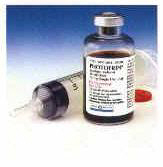
To treat the patients, the researchers gave each breast cancer patient 0.08 milligrams per kilogram (mg/kg) body weight of a photosensitizing (activated by light) drug called Photofrin (generic name, porfimer sodium). A 0.08 mg/kg dosage is lower than the standard Photofrin dose of 2.0 mg/kg. According to Dr. Mang, the researchers lowered the drug dosage so that they could deliver laser light deep within the tumor where the drug concentration is highest without harming the surrounding normal breast tissue. After an injection of Photofrin, the patients were treated with an intense laser beam that activates Photofrin. The laser was aimed directly at the tumor with an endoscope, causing Photofrin to produce a toxic chemical that kills cancer cells.
A total of 102 recurrent breast cancer tumors in the chest wall were treated in the study, and 89% of those tumors were eliminated. Among the other 11% of the tumors, 8% were successfully reduced in size. Only 3% of tumors did not respond to the photodynamic therapy. All of the tumors ranged in size from one fifth of an inch to three and a half inches. The patients chosen for the study had all been previously treated with surgery, radiation or chemotherapy without success.
The researchers believe that photodynamic therapy could possibly be used on other forms of cancer. Because the normal tissue surrounding the tumor cells absorbs less of the drug than malignant (cancerous) tissue, the key is to find the drug-to-light ratio for each tumor type that will most effectively destroy the malignant tissue while not harming the surrounding normal tissue.
According to Dr. Mang, the results of the study show that low dose photodynamic therapy has more applications than originally thought. Currently, photodynamic therapy is used in non-small-cell lung cancer patients and for obstructing esophageal tumors. Dr. Mang says photodynamic therapy could provide "very good local control" of recurrent breast cancer.
A diagnosis of recurrent breast cancer is often more devastating or psychologically difficult for a woman than her initial breast cancer diagnosis. Breast cancer most commonly recurs in the same area as the original cancer had occurred. A recurrence of non-invasive breast cancer such as ductal carcinoma in situ (DCIS) is usually less serious than a recurrence of invasive cancer. In general, invasive local recurrences are more aggressive since they have a second chance of spreading ( metastasizing) to other areas of the body.
- The April 11, 2000 Reuters Health report, "Breast Cancer Lesions on Chest Wall Respond to Low-Dose Photodynamic Therapy," is available at http://womenshealth.medscape.com/reuters/prof/2000/04/04.11/20000411clin012.asp
- The April 13, 2000 Oncology.com report by Geri Clark, "Laser Therapy Successfully Treats Breast Cancer Lesions in Chest Wall," is available at http://www.oncology.com/news/news_view/1,1017,2916_2917_1,00.asp
- The April 8, 2000 EurekAlert report, "Drugs with Lasers Offer Promising New Cancer Treatment," is available at http://www.cancerfacts.com/News.asp?CancerTypeId=5&CB=&NewsId=430
