


A recent study by researchers at the University of California at San Francisco revealed that more than 70% of breast cancer patients try alternative treatments in addition to standard therapies established by their medical physicians. The study also showed that the majority of patients do not tell their physicians about the alternative treatments because they do not believe mainstream physicians have any interest in non-traditional therapies. Researchers believe this lack of communication between physician and patient puts women at greater risk for drug interactions and serious setbacks in cancer treatment.
In a five year study of 86 women in San Francisco who speak either English, Chinese, or Spanish, the majority of patients had tried alternative treatments such as acupuncture, vitamin and nutritional supplements, herbs, meditation, or visualization, in addition to their standard therapies. Contrary to the public’s misconception that most women who try alternative treatments are older and do so only when all standard treatments have failed, the study showed that women between the ages of 35 and 49 are more likely to use alternative treatments than patients between the ages of 60 and 74.
When asked why women do not tell their physicians about using alternative treatments, the majority of women said that they either believed traditional physicians did not know enough about alternative therapies or that the physicians would discourage them from continuing non-traditional practices. Steven Goldstein, MD, who treats several breast cancer patients at his private practice in New York, believes there is a lack of trust between physicians and patients because physicians are not listening to their patients’ needs. Goldstein believes that breast cancer treatment should involve both traditional and non-traditional practices.
The study reveals the fact that most women are receptive to alternative forms of treatment even though their physicians may not feel the same way. Shelly Adler, medical anthropology professor at the University of San Francisco, said that the majority of patients are not hesitant to tell their alternative practitioners about treatment from their medical physicians but fear a negative response from the medical physicians concerning alternative treatments.
While the majority of nutritional supplements may be taken with anti-cancer drugs or other standard therapies, a few may cause negative reactions. A recent study conducted at the University of North Carolina at Chapel Hill showed that vitamin A and vitamin E kept cancer cells from dying in laboratory rats. However, these results have not been confirmed in humans. On the other hand, a study conducted at the Istituto Nazionale Tumori in Milan shows that fenretinide, a non-toxic drug related to Vitamin A, may significantly reduce the incidences of recurrent (returning) breast cancer in pre-menopausal women. Though research on the benefits or determents of vitamins and herbs is ongoing, patients should tell their physicians about any alternative medicines they are considering, to avoid potential complications with standard treatments.
- The December 14, 1999 Science Daily report, "Study: Avoiding Vitamin A, E Might Improve
Cancer Therapy," is available at
http://www.sciencedaily.com/releases/1999/12/991214072746.asp
- The February 3, 2000 HealthSCOUT
report by Gary Gately, "Trust Me, Say Docs; No, Say Breast Cancer
Patients is available at
http://www.healthscout.com/cgi-bin/WebObjects/
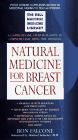
Af.woa/6/wo/zN3000eu100Mr700vy/1.0.7.5.30.1.0.7.0.1 - Natural Medicine for Breast Cancer (1997) by Ron Falcone and Lynn
Sonberg provides information on herbs, vitamins, minerals,
enzymes, and other natural treatments to help combat side effects
of breast cancer treatments. Click
here for pricing and ordering
information.
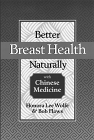
- Better Breast Health Naturally with Chinese Medicine (1998) by Honora Lee Wolfe and Bob Flaws provides information on how to help maintain breast health naturally. Click here for pricing and ordering information.
- For additional resources, please visit the Imaginis.com Breast Health Bookstore at http://www.imaginis.com/bookstore/breasthealth/
