


There are three main types of percutaneous (through the skin) needle biopsy: fine needle aspiration/FNA, core biopsy, suction assisted biopsy. Percutaneous biopsy is minimally invasive, causes little pain and requires no sutures (stitches). Many percutaneous needle biopsy procedures are performed with image guidance. Patients undergo percutaneous biopsy procedures while awake. Many patients resume their normal lifestyle and routine the same day of the procedure.
Always check with the staff or physician performing the biopsy for specific directions, as procedures vary. In general, patients may eat a light breakfast prior to the exam and biopsy procedure. A comfortable two piece garment should be worn so that only one piece of clothing has to be removed. Many times patients will be requested to wear a modest gown during the biopsy procedure. Women who are scheduled for mammography and biopsy should not wear talcum powder, deodorant, lotion or perfume under their arms or on their breasts on the day of the exam. Patients who take blood thinners and aspirin are often asked to discontinue using them prior to the exam (3 days for coumadin or other blood thinners, 7 days for aspirin or ibuprofen). Any jewelry worn (especially earrings or necklaces) should be easily and quickly removable, especially if the patient will undergo a prone (lying face down) procedure.
The skin above the region to be biopsied is cleansed. In some cases, the region of the biopsy needle insertion will be anesthetized with a small hypodermic needle before the sampling needle is placed. In addition, a general sedative is sometimes used to further reduce discomfort.
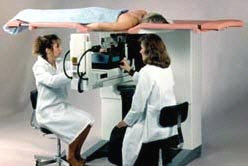
The radiologist and technologist perform a prone stereotactic biopsy while the patient lies comfortably
During the needle biopsy, patients may experience a slight pressure but should not experience any pain. Typically, several samples are removed. The samples will be sent to the pathology laboratory for diagnosis. The length of the exam can vary up to an hour, depending on the type of biopsy being performed. During the procedure, the patient will be informed of what is occurring and what he or she will need to do to assist in the exam. Typically the patient needs to cooperate and remain still. For biopsy of the lung or upper abdomen or liver, patients may be required to hold their breath during the imaging portion of the biopsy and during the needle placement. There will be some minor bleeding when the needle is placed. For biopsy that involves passing the needle near a rib, patient discomfort may be greater because of the sensitivity of the rib bone. This should not be cause for alarm. In general, patients should try to relax and remain calm and still during a biopsy.
After the biopsy procedure, a bandage will be placed over the needle insertion area and a cold pack may be applied to relieve swelling or bruising if needed. Typically, patients may take Tylenol (two 500 mg tablets) every four to six hours for discomfort, if needed. Patients should monitor the biopsy location for signs of inflammation, bleeding or pressure. Patients should keep the biopsy site clean and disinfected. Patients may notice some bruising of the area that should resolve in 5-7 days (or possibly longer if initial bleeding was greater than usual). Patients should contact their physician if they experience any excessive swelling, bleeding, drainage, redness, or heat in the area of the biopsy or breast. Patients should discuss the final results of the biopsy procedure with their physician within a few days of the procedure.
